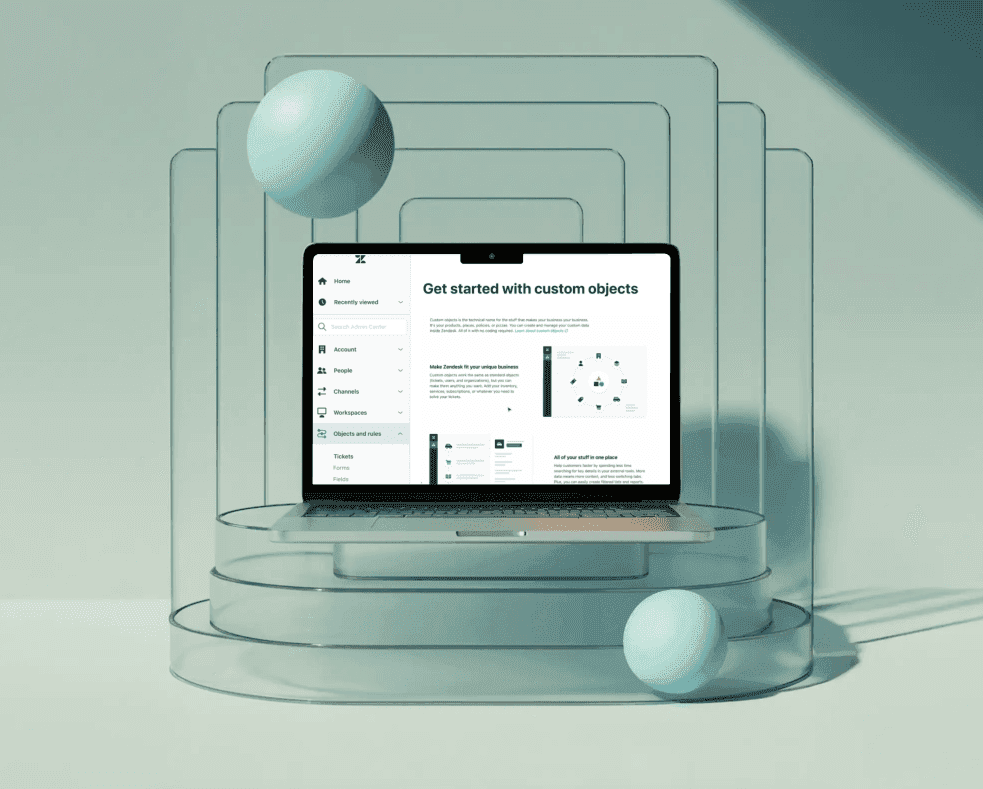
From Customer POV to Platform Data - Scaling User Context at Zendesk
Group Product Manager (acting)·Zendesk – Icarus → Platform (Sunshine, Custom Objects, Customer Context)·2020-2021
EnterprisePlatform / InfraProduct Strategy
"It was amazing to partner with you to drive the initial product MVP. You played an important role pushing to clear technical debt and establish key UX! We all appreciate the way you show up for the team and are always so enthusiastic, energetic, and passionate in sharing the team's progress. Your storytelling and presentation skills are something the design and product team have learned a lot from. Thank you for being such an amazing PM to work with."
The impact
240-customer beta analyzed. Median 65 objects per customer, median 0 relationships. A low/no-code Admin schema builder and 6 object templates. 18 engineers across 3 teams.
I built Custom Objects v2 from scratch as a separate product, giving Zendesk admins a way to model real business relationships (assets, warranties, subscriptions) without writing code. Full GA shipped after I left. In my final months I joined the Agent Workspace activation program: of 75 enterprise accounts I reviewed, 55 ($20M ARR) migrated with low friction, with a 6-29% performance improvement and a 99.7% smoke test pass rate.
What the beta data said
Custom Objects v1 was API-only. That meant only developer-heavy customers could use it, and the beta had limited adoption. Enterprise accounts needed flexible data modeling, but the platform could not support it. The beta was also written in a modern stack that didn't integrate with Zendesk's legacy systems, so iterating on it was not an option.
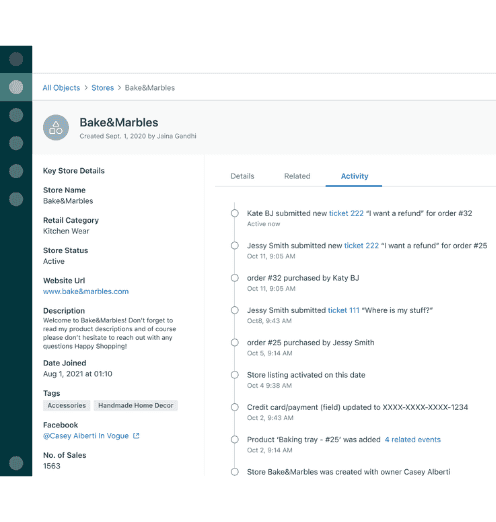
Before deciding what v2 should be, I pulled the schemas from all 240 beta customers. The median customer had created 65 objects and zero relationships between them. 134 accounts had no relationships at all, and 19 had exactly one. Usage didn't track ARR or agent count either. Customers were putting data into Custom Objects and leaving it stranded, disconnected from the tickets and users their agents actually work in. The problem wasn't storage. It was that connecting data required an engineer.
That set the bar for v2 and how we'd measure it. I defined three beta success metrics: adoption (customers migrating to v2 and adding new schemas), value (the share of objects related to system objects instead of orphaned), and integration integrity (no discrepancies or duplicates against the customer's source systems).
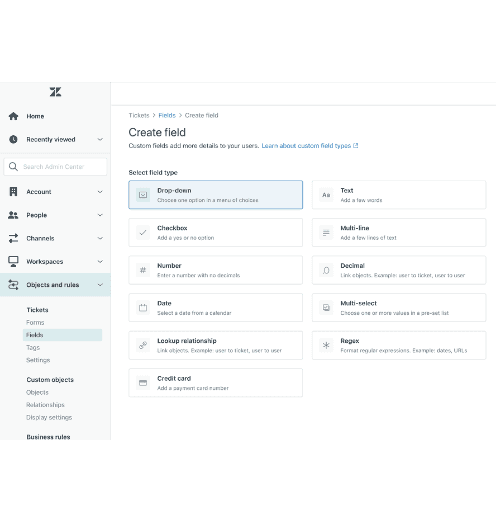
I led the GA build from scratch, separate from the existing beta. At its center was an Admin schema builder so non-technical admins could create, manage, and relate custom data structures without engineering help.

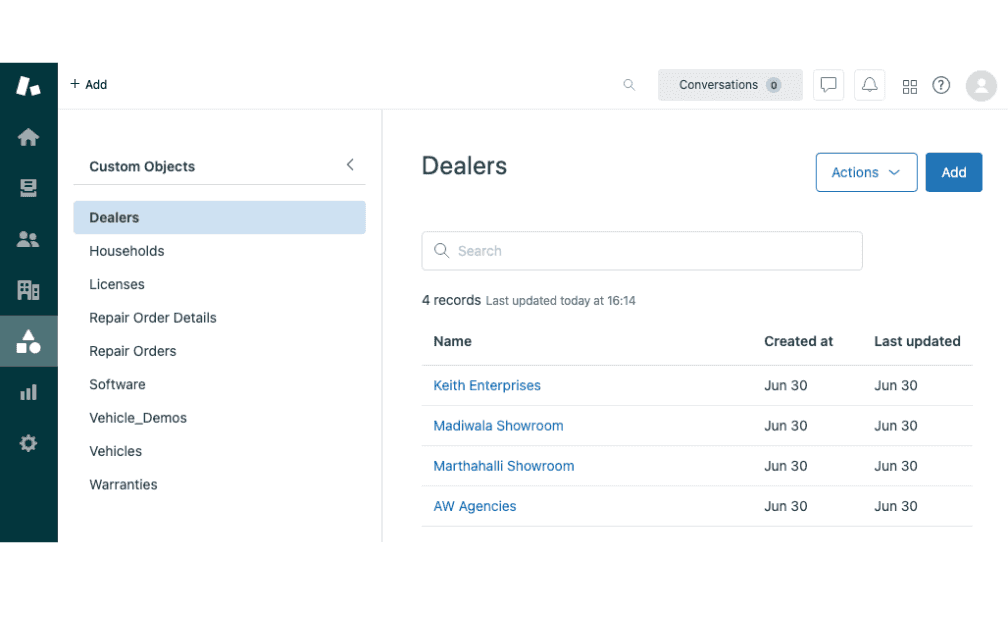
We shipped 6 object templates, bulk CRUD, relationship permissions, and integration with Zendesk's Logic and Automation systems so custom objects could trigger the same workflows as native ticket data.

To get the data model right, I ran the Data Management Admin rolling study (Feb 2021): 12+ participant interviews across car rental, supply chain, event management, healthcare, insurance, IT, and e-commerce. Two findings shaped the build. Admins needed inspiration for what to model, which the templates answer. Visibility control was critical for larger teams, which relationship permissions answer. I analyzed beta schemas from early adopters to find the most common object relationships (assets, cases, warranties) and benchmarked against Salesforce, Freshdesk, Hubspot, Intercom, Kustomer, and ServiceNow. The guiding design principle came from a strategy session with VP Product Shawna Wolverton: "I should not make my data model my customer's problem."
I operated at acting group PM scope, coordinating across ~18 engineers, managers, and designers on three teams (Triggers & Logic, Sunshine UX/Icarus, and Custom Fields) through a period where three consecutive managers went on leave.
What this built
- A platform data model that scales with the customer's business. Custom Objects extended Zendesk's native schema so enterprise customers could track real-world relationships, not just tickets and users.
- An Admin UX that removed the code barrier. Schema builder, object explorer, and unified fields management made structured data accessible to non-technical admins for the first time.
- A measurable definition of success for platform data. Adoption, related-versus-orphaned objects, and integration integrity let the team judge v2 by whether customers connected their data, not just whether they stored it.
What people said about this work
EricaDirector of Product Management, Zendesk“I think you're great. I'm excited to see you really executing. Transferring product ownership to your gang was awesome - lets you demonstrate everything I knew you could do when I hired you. You present well and are well liked, and it's known you bring huge value which is so awesome.”

Jian WeiDirector, Platform Design, Zendesk“It was amazing to partner with you to drive the initial product MVP. You played an important role pushing to clear technical debt and establish key UX! We all appreciate the way you show up for the team and are always so enthusiastic, energetic, and passionate in sharing the team's progress. Your storytelling and presentation skills are something the design and product team have learned a lot from. Thank you for being such an amazing PM to work with.”

The thinking behind this work
Experiment-Driven Development
The cheapest experiment that could change your mind is worth more than the most sophisticated feature nobody asked for.
Agentic UX
When AI takes actions on behalf of users, the UX rules change. Trust calibration, progressive disclosure, and error recovery all need rethinking.
Sustainable Pace
Sustainable pace means your team can maintain its current rhythm indefinitely. Sprints of overtime produce short-term output and long-term damage.
Services behind this work
Related case studies
Delivery Transformation: Reduced Cycle Times
Principal Product Coach · 2023 - 2024
Improved delivery speed and team clarity by redefining rituals, coaching, and product operations across Kaiser IT.
U.S. Space Force - Platform Delivery Modernization
Product Portfolio Lead · 2024 - 2025
As the Product Lead for the US Space Force's Capability Delivery Division, I helped transform a stalled, fractured development org into a functioning delivery engine. I rebuilt the backlog, clarified the roadmap, shaped the rituals, and helped engineering teams move from chaos to confidence - without burning out.
Zendesk Sunshine Platform UX and Customer Context
Senior Product Manager, Platform · 2020-2021
Shipped Customer Context on Zendesk's Sunshine platform by solving the harder problem: not surfacing more agent data, but the few signals that actually change how a conversation goes, without slowing the workspace down.
Want to bring this kind of thinking to your team?
I help teams ship products with clarity, speed, and care.