In June 2020, Rawan Serna sent me an Instagram DM. She'd worked in hospitality and food & beverage her entire career, most recently as a sales manager balancing accounts for conventions at Moscone Center. Then COVID hit. She was furloughed. And she knew she didn't want to go back.
She wanted something creative and strategic in tech. But she wasn't sure what that looked like. She'd been googling certifications and had landed on "program management," which she'd been calling it for about three months before we talked. She didn't know the difference between product and project management yet. That's where we started.
Finding the On-Ramp
I pointed Rawan toward product management specifically, the kind where you're building software with a team, not managing timelines. She took a Digital Product Management course through UVA's Darden School on Coursera (June-July 2020), then got her Certified Scrum Master through Scrum Alliance in July.
After both courses, she was motivated. She started applying for Scrum Master positions. But after a month of job searching, reality set in: the postings were asking for experience levels she didn't have. She reached back out.
We formed a plan: weekly PM training sessions built around a real case study. Not theory. Not flashcards. Actual product work she could show in an interview.
Choosing a Practice Product
Rawan picked the Tone It Up fitness app, a membership-based health and fitness platform for women. It was a good choice: a real product with clear business goals (retain paid membership, empower women to prioritize health, connect users), active users talking about it online, and direct competitors to study.
I had her start where every PM should start: with the problem, not the solution.
Research That Looked Like Real Work
Her first job was to find evidence of real user pain. She went to the TIU subreddit and pulled actual posts. Users were confused about which program to join. Long-time members felt the community had shifted from motivation to sales. People were openly asking whether the paid membership was worth it.
She then built a competitive analysis comparing TIU against Sweat, Strava, Apple Fitness, MyFitnessPal, and Fitbit. The result was damning in a useful way: TIU was the only app that didn't help users select a program, didn't let users do multiple programs at once, didn't offer member-to-member chat, and didn't have community boards. Every competitor had at least some of those.
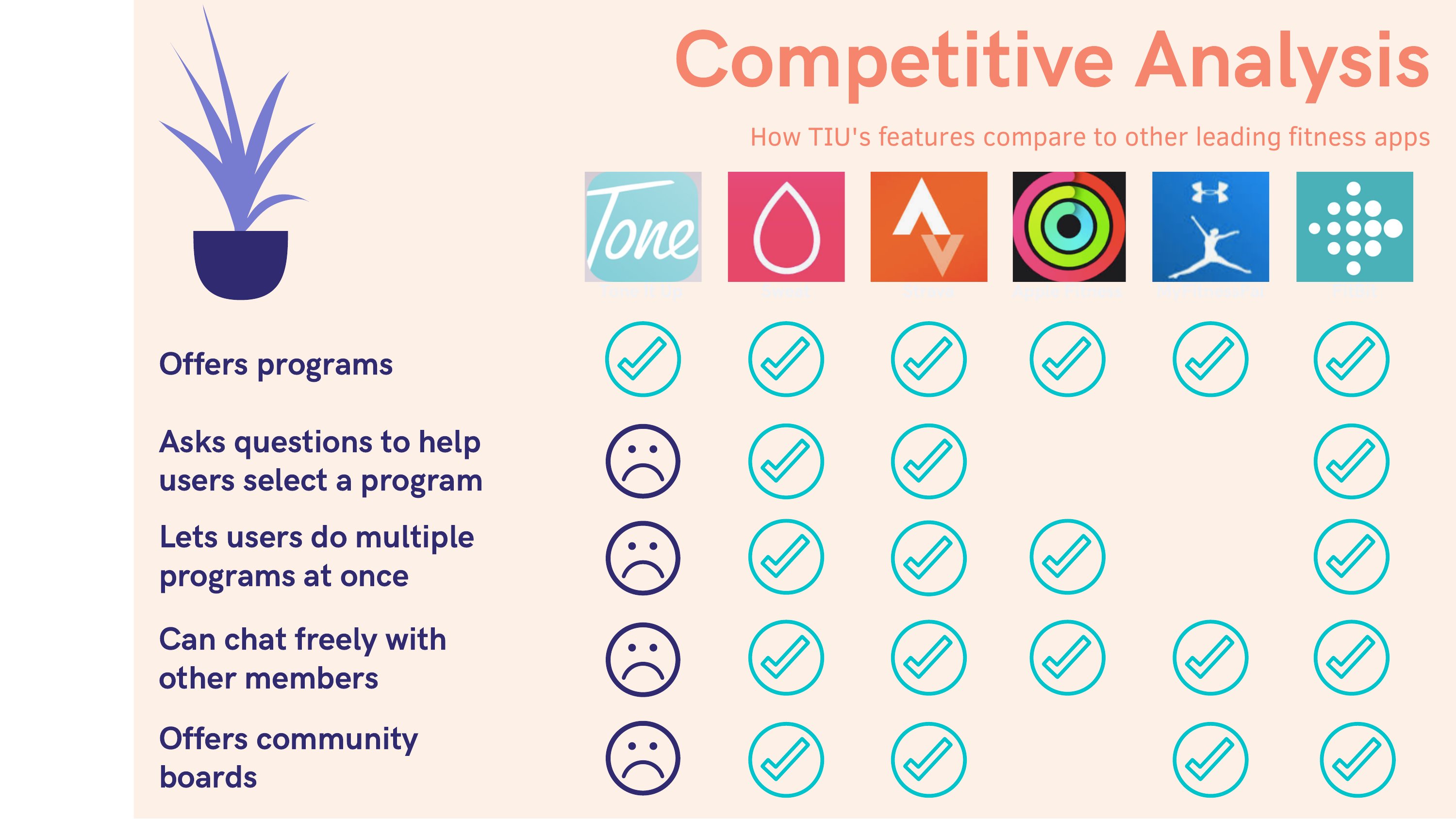
This wasn't busywork. This was the kind of research you'd present to a stakeholder to justify a roadmap decision.
Building Personas and Mapping Journeys
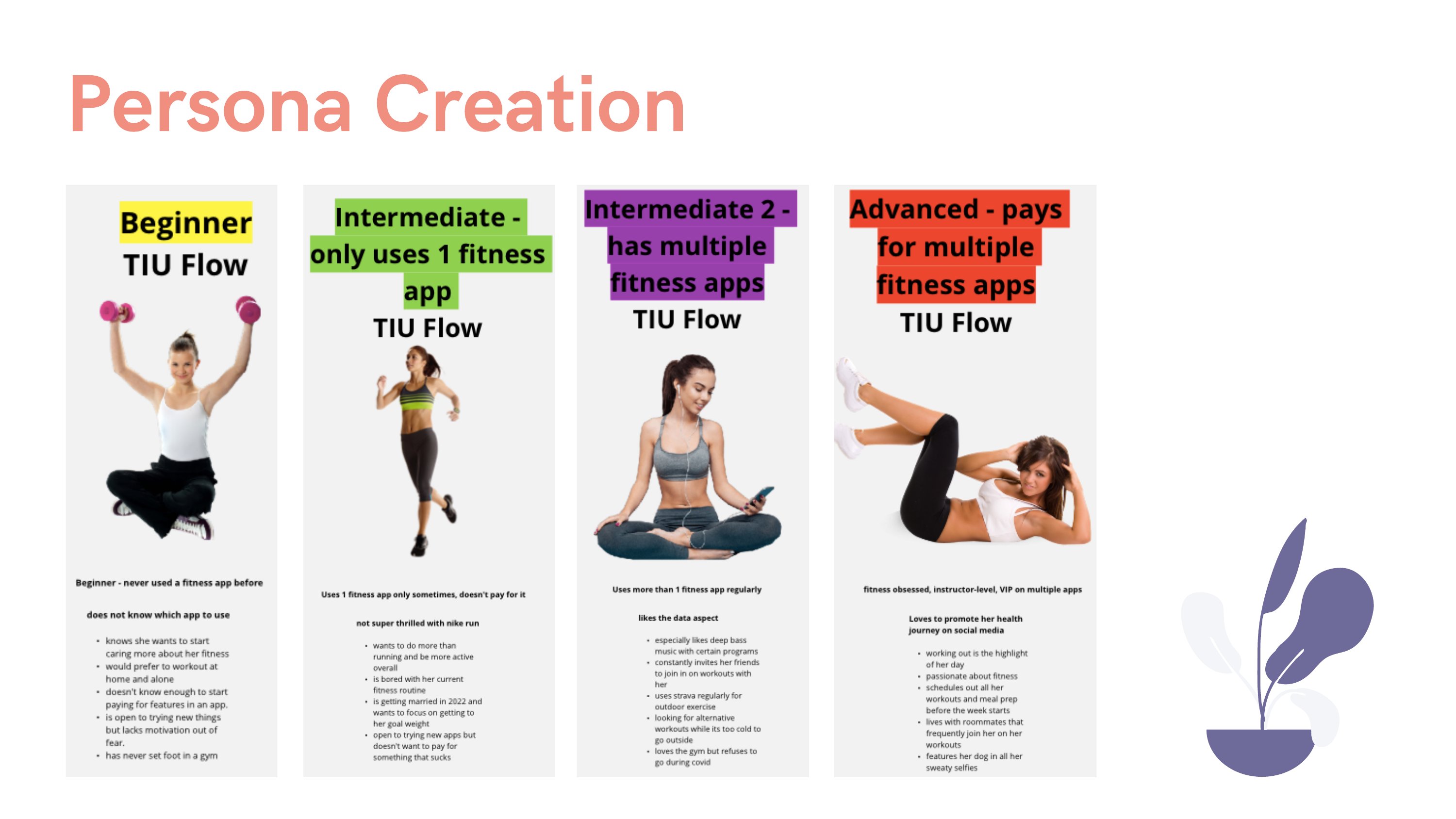
From her Reddit research and app exploration, Rawan created four personas spanning the TIU user spectrum: a Beginner who'd never used a fitness app and didn't know where to start, an Intermediate user bored with her current routine, an Intermediate 2 who used multiple fitness apps and liked data, and an Advanced user who was fitness-obsessed and promoted her journey on social media.
Then she mapped the full user journey, from pre-marketing all the way through one year of use. She layered on orange post-its for gaps she'd found in the competitive analysis and red post-its for problems the personas actually experienced at each stage.
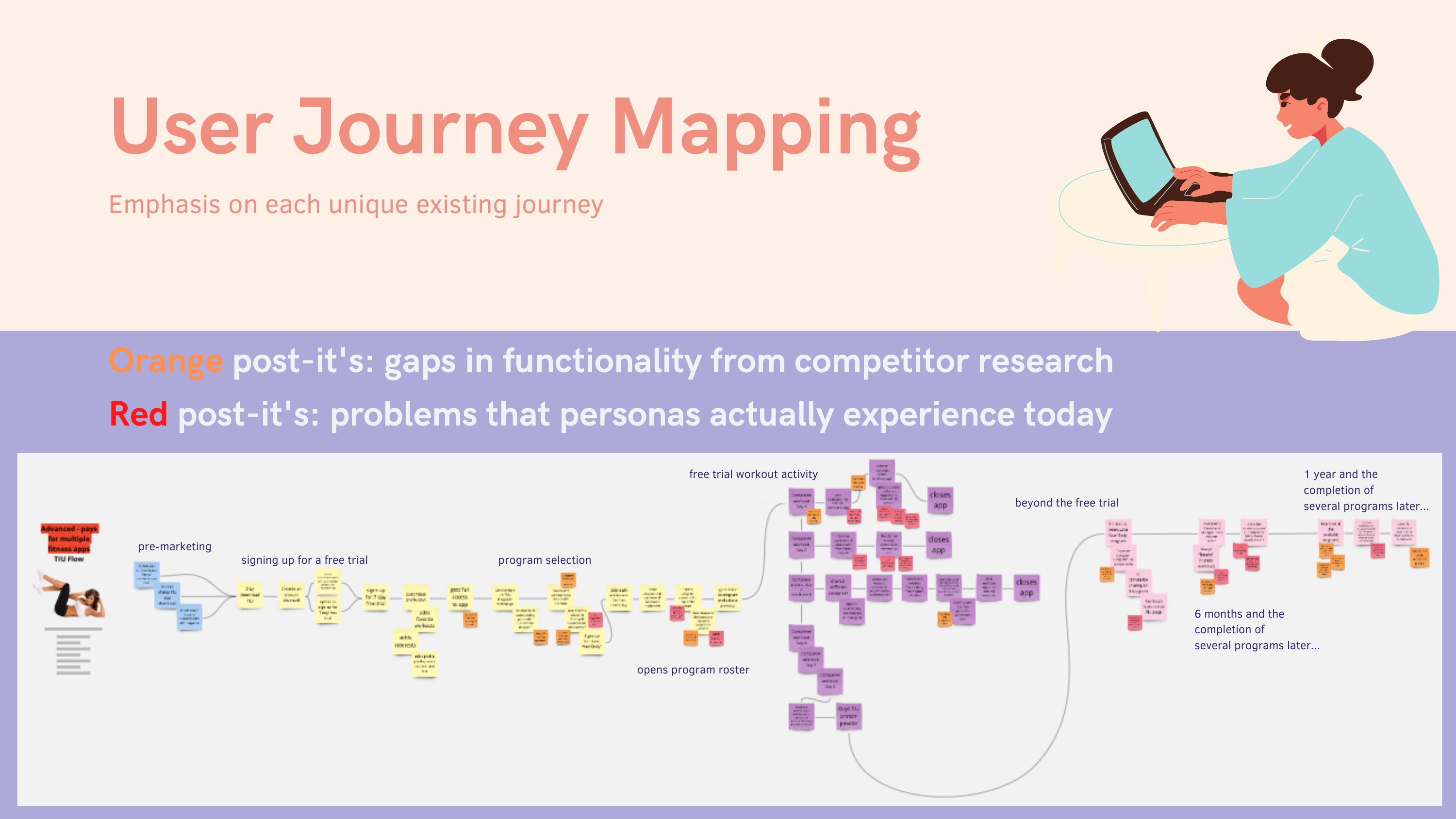
When I reviewed the journey map, I told her to move on before she got stuck in "analysis paralysis." She'd done enough discovery. Now it was time to figure out which problems actually mattered.
From Problems to Solutions
We used a prioritization matrix with two axes: how painful is this problem, and how likely is it to impact TIU's business goals? She sorted every problem she'd found into the matrix, separately for community/connection problems, program/workout problems, and profile/goal-setting problems.
Then came solutioning. We ran a "How Might We" exercise: how might we convince all users that TIU is worth paying for? She brainstormed dozens of ideas: community boards, usernames, sweaty selfies, accountability buddies, fitness levels, live workouts, push notification fixes, goal-setting questionnaires, challenges, in-app blogs.
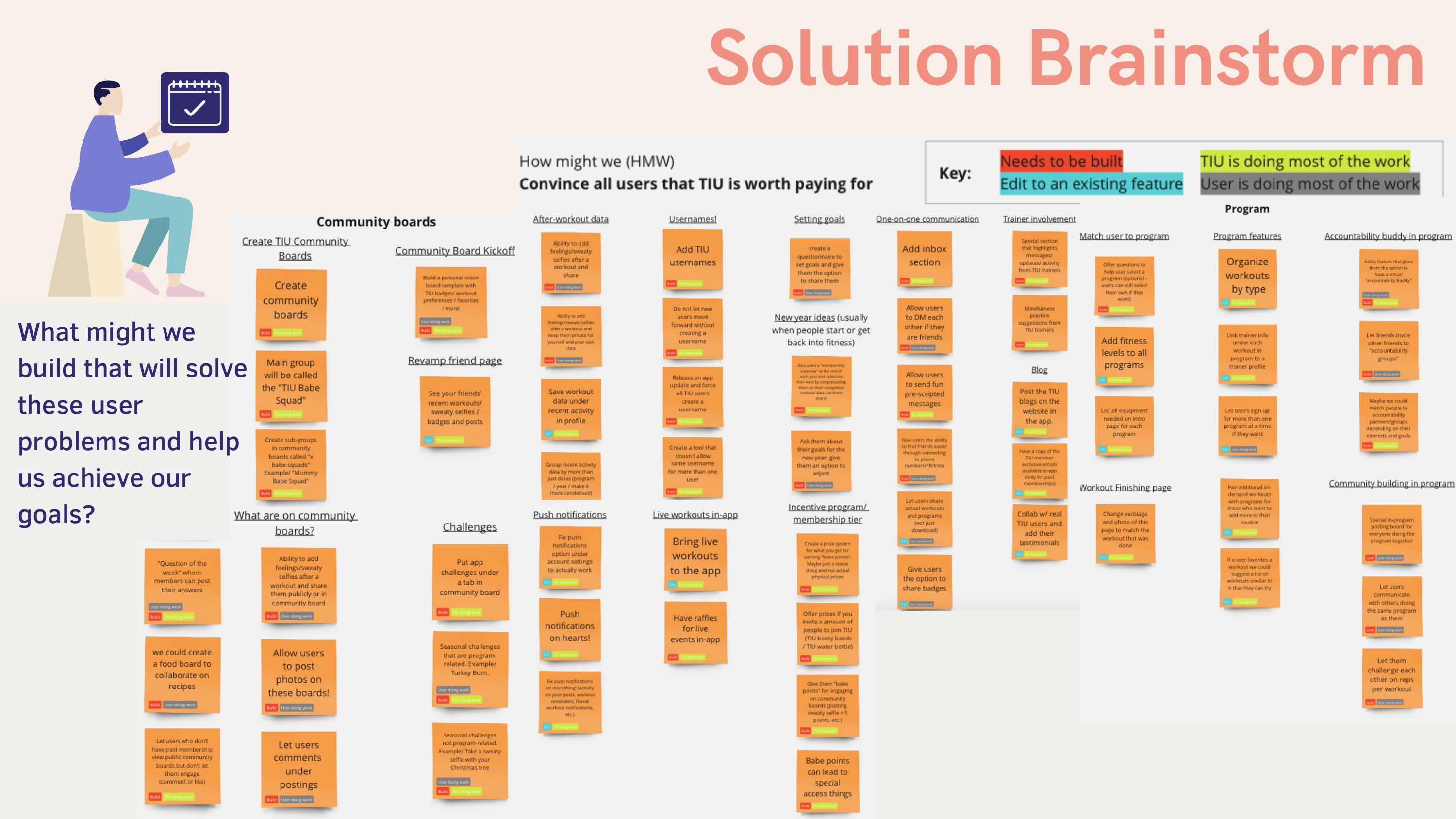
She then ran a second matrix measuring each solution's complexity against its likelihood of achieving the business goals. Two solutions floated to the top: add fitness levels to all programs (so users aren't over- or under-challenged) and let users sign up for more than one program at a time (so they don't leave to find variety elsewhere).
The Pivot
This is the moment that mattered most.
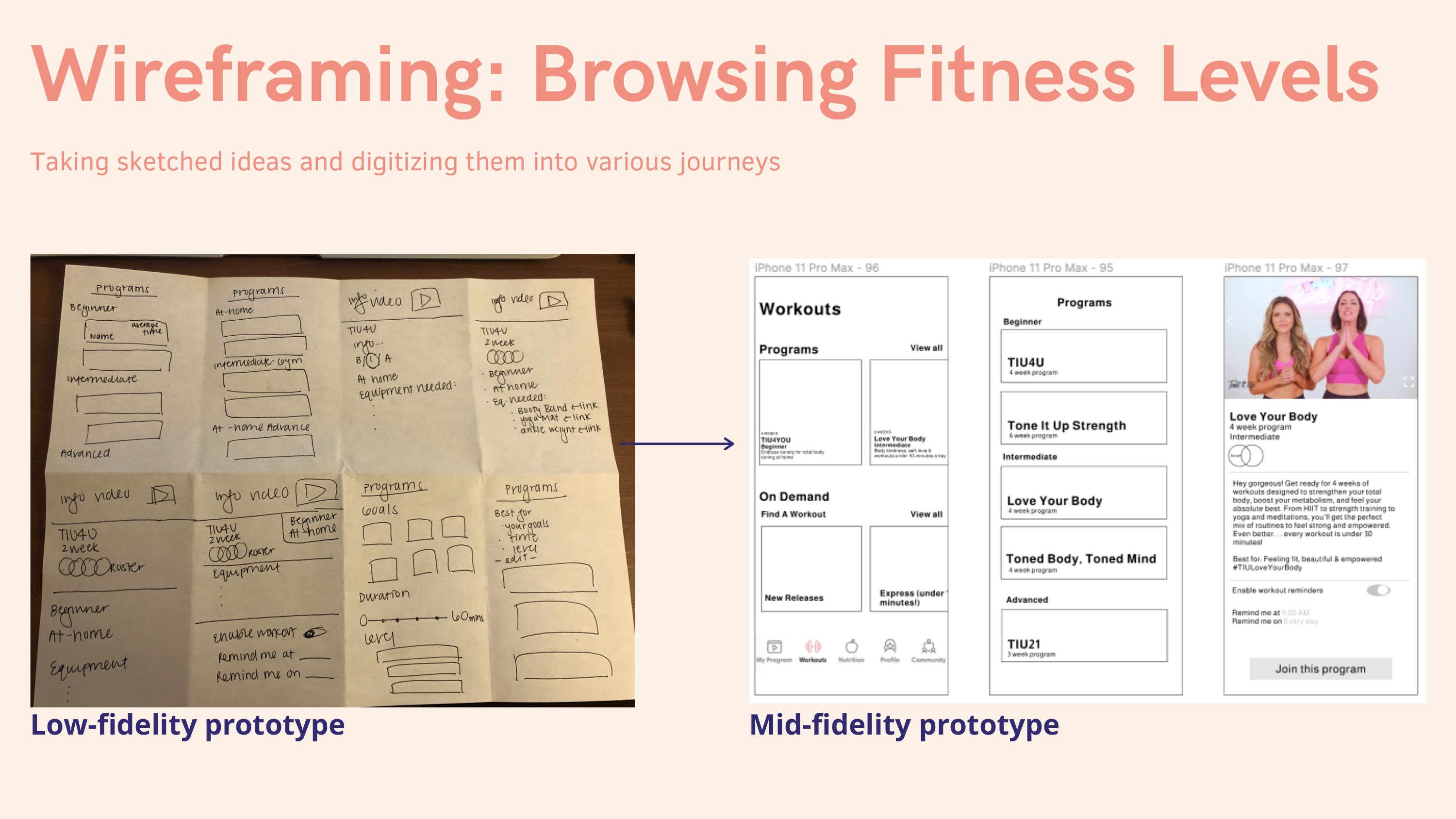
Rawan wireframed both solutions. The fitness levels feature was relatively straightforward: adding a label and filter to existing program cards. But the second program sign-up, which looked simple on the surface, turned out to be deeply complex. The app had a linear flow designed for one program at a time. Adding a second meant non-linear navigation, multiple entry points, changes to the congratulations screen, queue management, and significant technical debt risk.
From Rawan's own notes after wireframing: "Rawan realized that adding a 2nd program probably should not have been the feature she prioritized. It was way too complicated to start off. So many different things to consider."
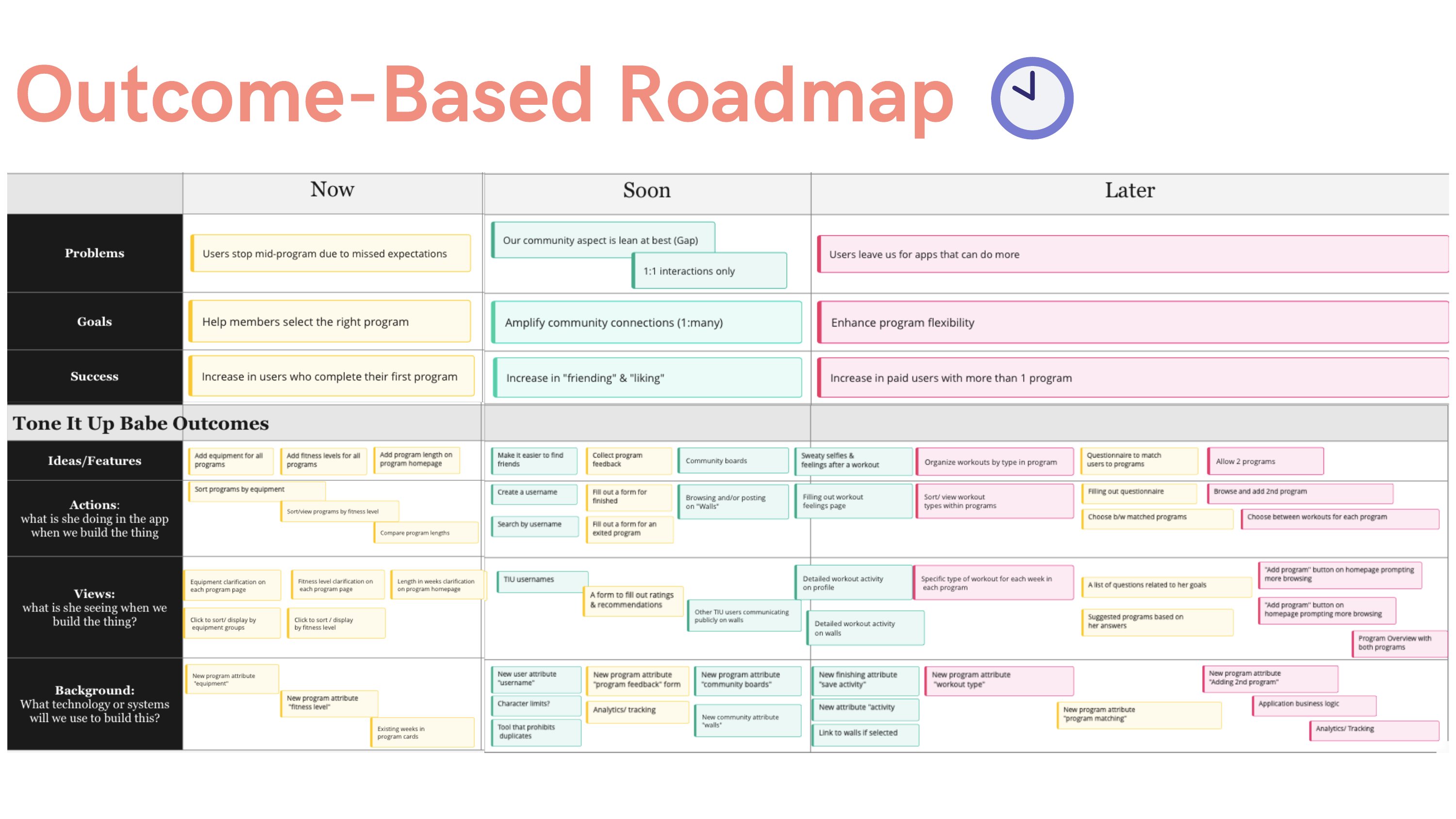
She made the call to pivot. Fitness levels would be the "Now" on the roadmap. Multi-program sign-up moved to "Later."
That decision showed she could think like a PM. She understood tradeoffs, not just UX flows. She could kill a feature she'd already invested time in because the evidence told her to. That's the hardest skill to teach, and she got there on her own.
From Sketches to Stories
With the pivot behind her, everything got sharper. She did Crazy 8's exercises on paper (rapid sketches of different screen layouts) then digitized the best ideas into mid-fidelity prototypes in Figma.
She built an outcome-based roadmap in Now/Soon/Later format, connecting each column to the problem it solved, the goal it served, and how success would be measured. This wasn't a feature list. It was a strategic document that anyone on a team could look at and understand the direction.
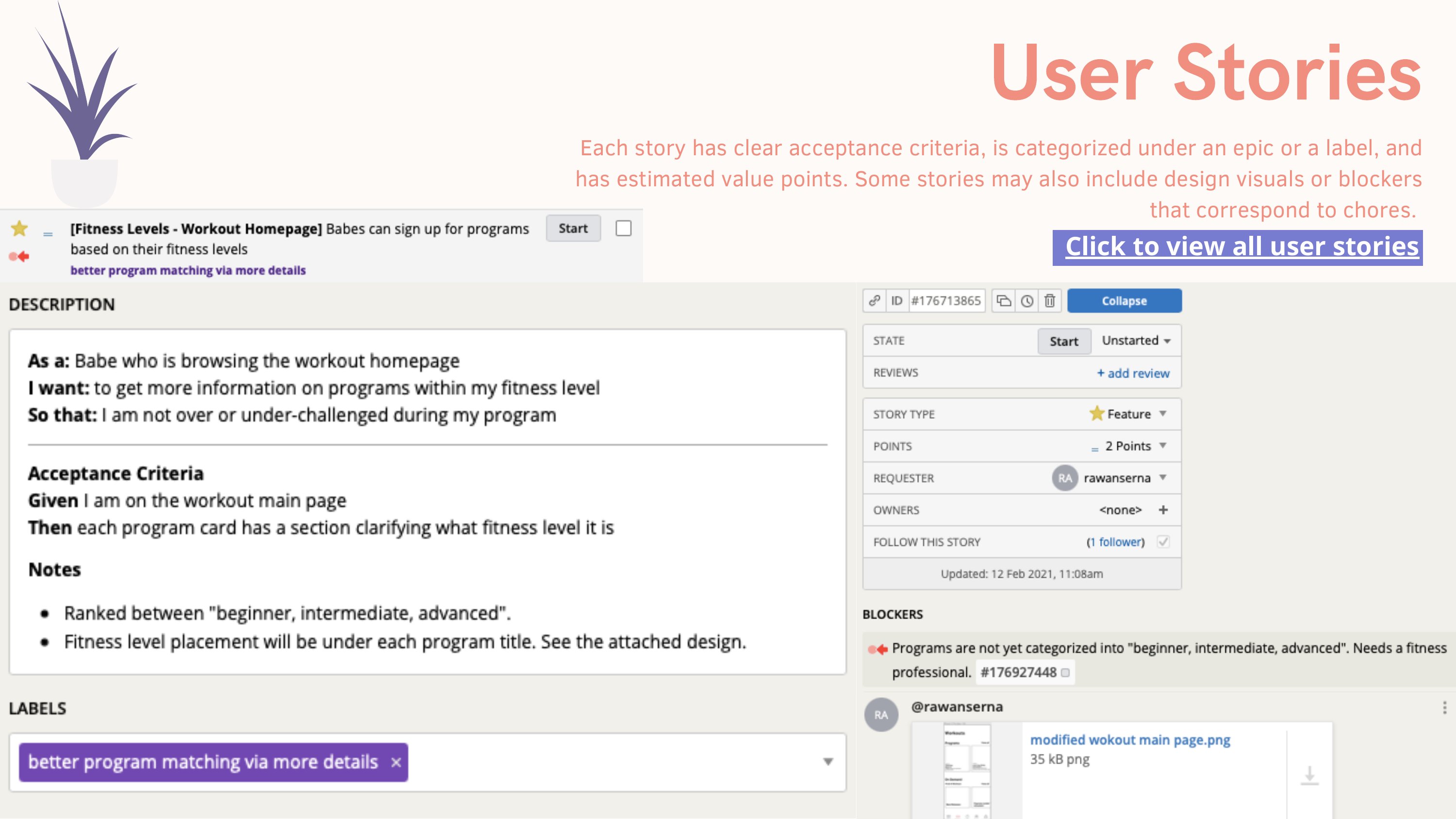
Then she wrote user stories in Pivotal Tracker: full stories with As a/I want/So that format, acceptance criteria in Gherkin, design attachments, blockers, and point estimates. My coaching on the stories: focus on the words you're using, make the impact clear to engineers, keep it as succinct as possible. Her stories improved significantly between the first and second draft.
Getting the Job
We'd been meeting weekly from October 2020 through March 2021. Along the way, she'd also done a Pivotal Labs-style interview exercise, learned about A/B testing, usability testing with clickable prototypes, APIs, OKRs, and path to production.
In April 2021, she started interviewing at Visiting Media. We prepped together: dissecting the job description, running through the technical interview, practicing her TIU case study presentation. The hiring manager asked for a full walk-through of the pitch deck. She was ready for it.
April 21st: she got the offer. April 26th: she signed as Junior Product Manager at Visiting Media.
Rawan went on to manage eight products there, with junior PMs reporting to her. She runs backlog refinement, roadmap reviews, and sprint planning across a full suite of tools. The case study she built during our coaching sessions was the artifact that got her through the door.
Thinking About Making the Leap?
If you're sitting in that in-between place where you're ready to try but not sure how to prove it, start with the PM Skill Matrix. It scores your strengths and gaps across the skills that actually matter, and gives you a free toolkit to start building your case.
If you want hands-on coaching like Rawan got (a structured program with a real case study, resume rewrite, and interview prep), reach out about Break Into Product. For more on the coaching approach behind it, read what I learned coaching 150 product managers.
Related services
Frameworks for this topic
Read next
A was a sharp engineer and artist who didn't want to commit to working on anything. The most useful thing I did as her mentor wasn't teaching her design, it was a tough-love conversation about being organized and accountable for deliverables. Here's the story of the accountability turn, sanded off for no one.
Most PM skills matrices fall flat. I built one based on spheres of influence - self, team, org - because skill is not tenure.
Lessons from healthcare, government, and startup product teams on designing experiments that drive real decisions.
Want to work together?
I help teams ship better products. Let's talk about your situation.
Get in touch