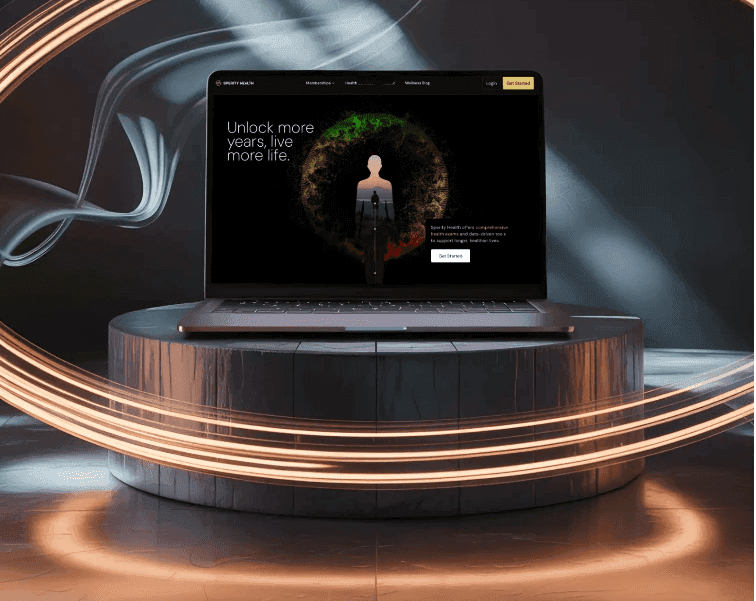
Designing a Wellness MVP for Biomarker-Driven Preventative Care
Healthcare0-to-1 MVPProduct Strategy
"Kate did an incredible job helping us go from an idea to actually bringing something to life. The platform looks fantastic, and it's clear how much thought and intentionality went into every piece of the build. There is no doubt this is going to make a real impact for our members."
The impact
Wix site to a functioning, HIPAA-compliant MVP. Validated with an 18-member first cohort. The Sperity Score live, turning biomarker noise into one number members trust. A team that ships without a fractional leader.
Sperity Health went from a clinical vision with no product to a working concierge-health platform with 5 member personas, service blueprints, onboarding journey maps, and cross-functional delivery rituals across product, ops, and care. The 18-member cohort was the point, not a vanity count: it was the smallest group that could prove the Score and the onboarding actually worked before spending real money to scale them.
The product problem was hiding inside the audience
When I joined, Sperity had no functional product, no backlog, and no shared definition of "MVP." The founders had deep clinical expertise but no structure to guide hiring, development, or compliance, and they were explaining a complex concierge service through a basic Wix site.
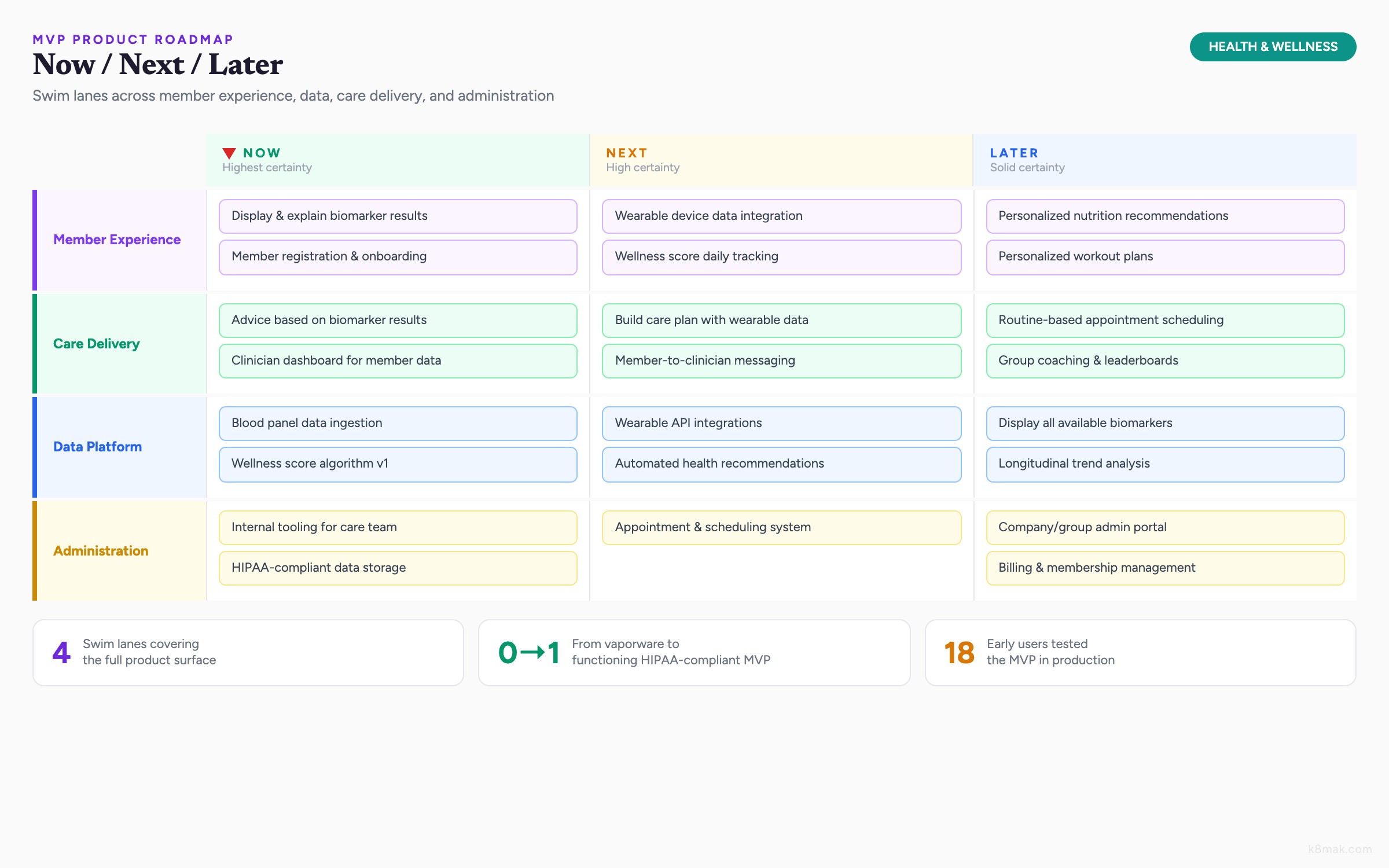
The harder problem was one a generalist roadmap would have flattened. Sperity's members split into two opposite people: tech-savvy executives who wanted every biomarker reading, and health-anxious spouses who needed reassurance and simplicity. Build for one and you lose the other. On top of that, the raw inputs were a firehose, Whoop HRV and sleep, Signos glucose, lab biomarkers, fitness evaluations, all arriving as medical noise rather than meaning. So I started by narrowing: a working-backwards session to define success, then a sequenced MVP roadmap that made explicit what was in, what could wait, and what had to be tested first. I built 5 member personas (Intro Tier, Max Tier, Spouse, Interested, Corporate) to keep the whole range in view instead of designing for an average user who did not exist.
I looked at the field before I drew a line
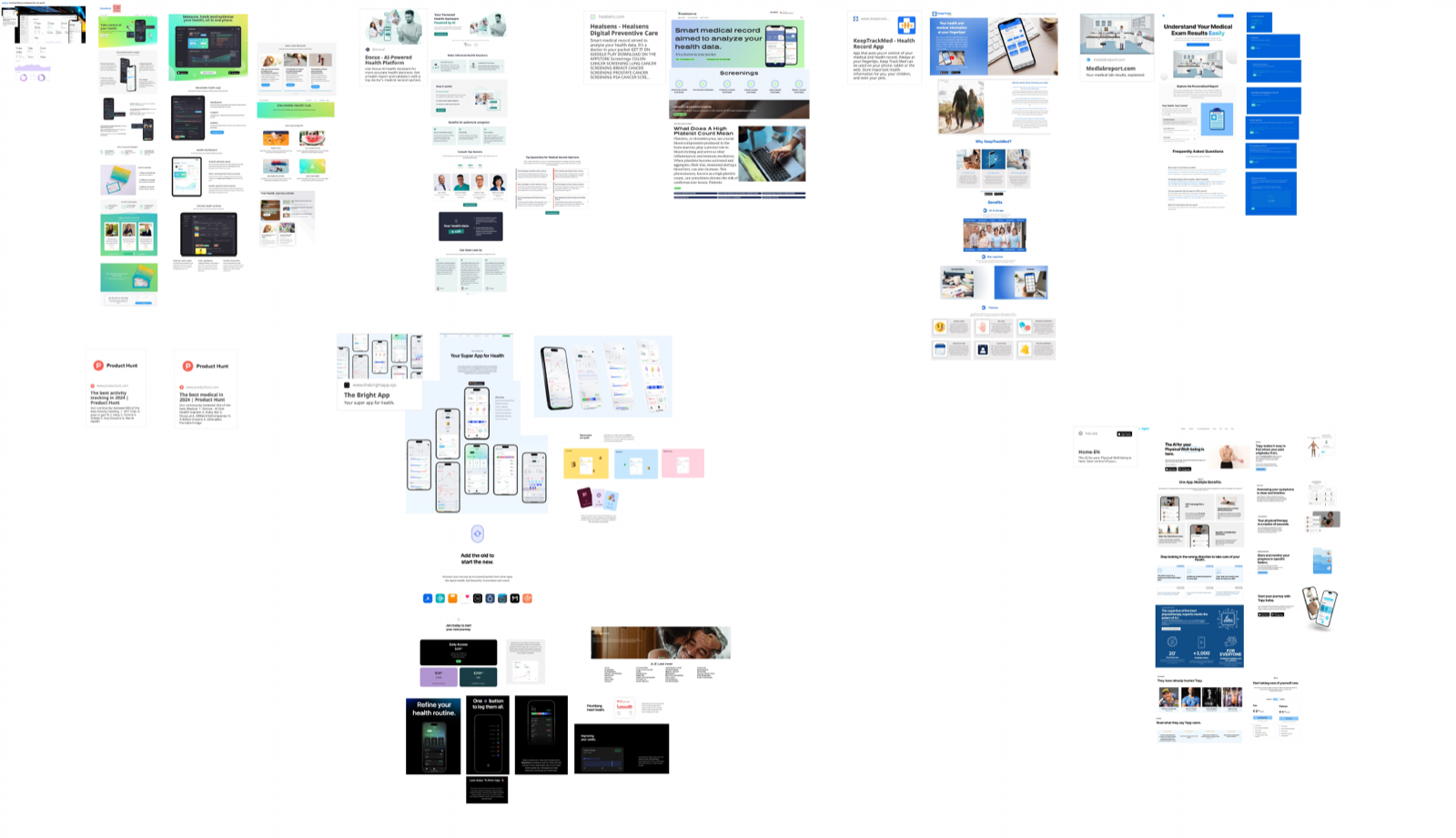
Before designing anything, I scanned the field: longevity and health-record apps like Docus AI, Healsens, KeepTrackMed, MedLabReport, and others. The pattern was clear and useful. Most of them either dumped raw data on the member or hid behind a generic "wellness" number with no clinical backbone. That gap, clinically real but member-legible, was the opening Sperity could own. I paired that scan with member and physician interview scripts and a map of Sperity's current-state onboarding and payment flows (a manual stack of Trello, Google Drive, MyChart, Wix, DocuSign, and QuickBooks) so the MVP was defined against what people actually did, not what a slide assumed.
One number did the work of a dashboard
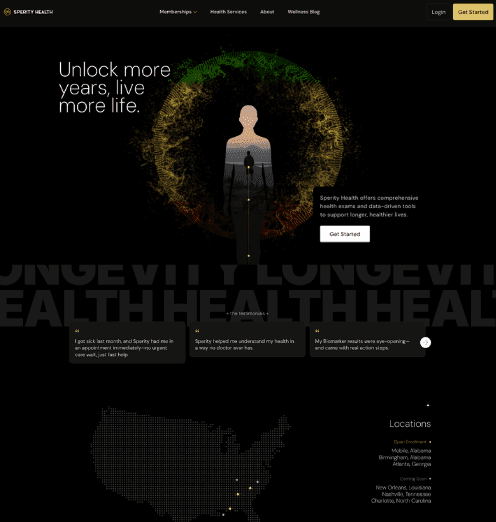
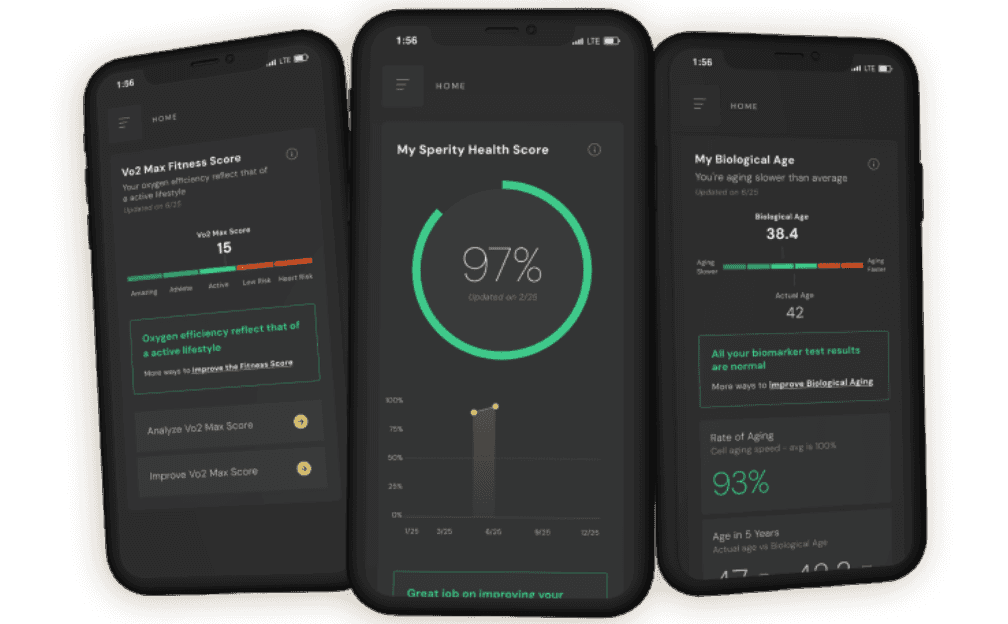
The highest-leverage decision was to anchor the entire experience on a single metric. Working directly with Sperity's physicians, I co-designed the Sperity Score, a daily 0-100 wellness number integrating Whoop, Signos, biomarker, and fitness data. The hard part was not the math; it was making one number that was clinically defensible to the physicians and legible to an anxious spouse at the same time, and that could absorb new data sources without changing meaning.
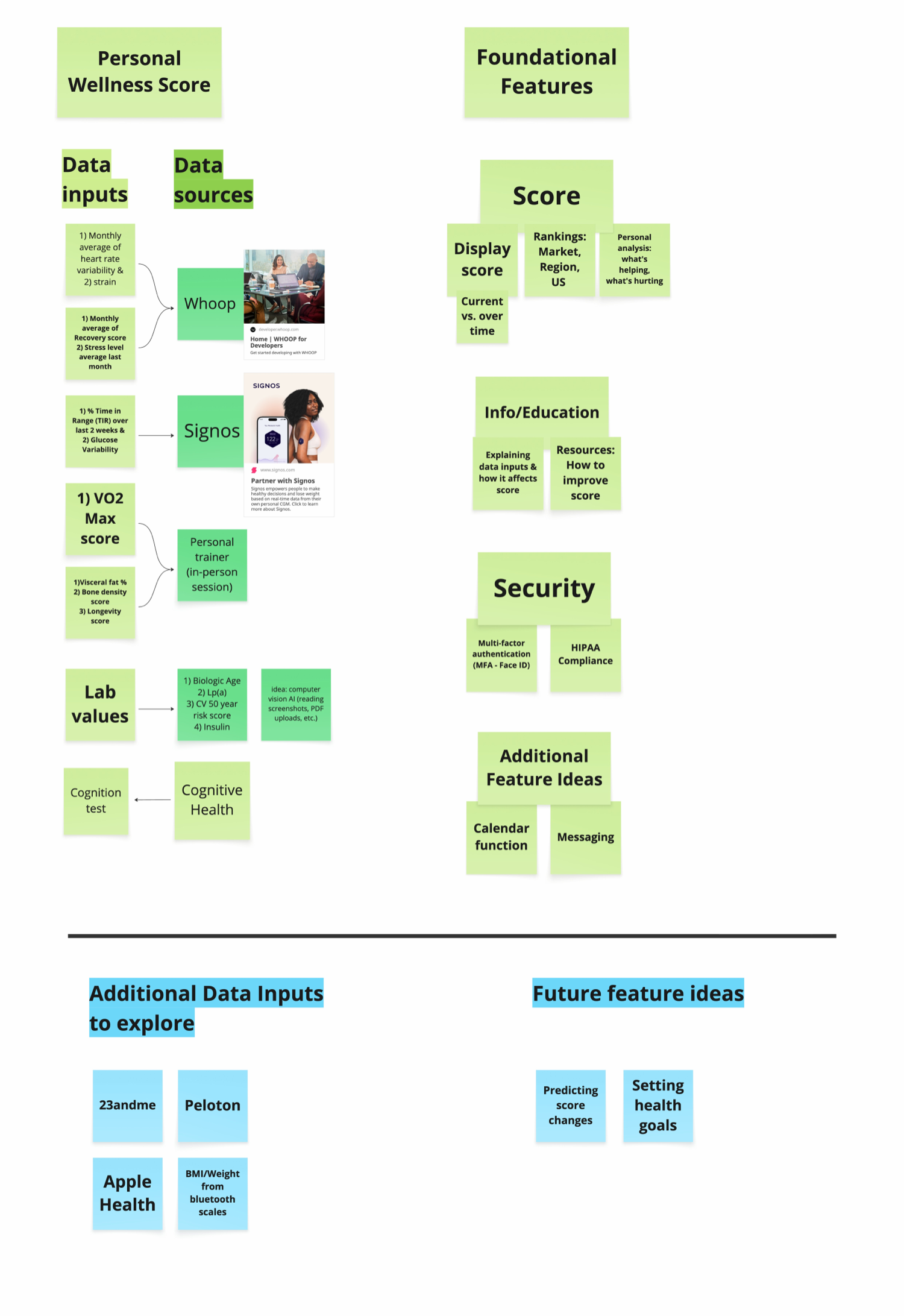
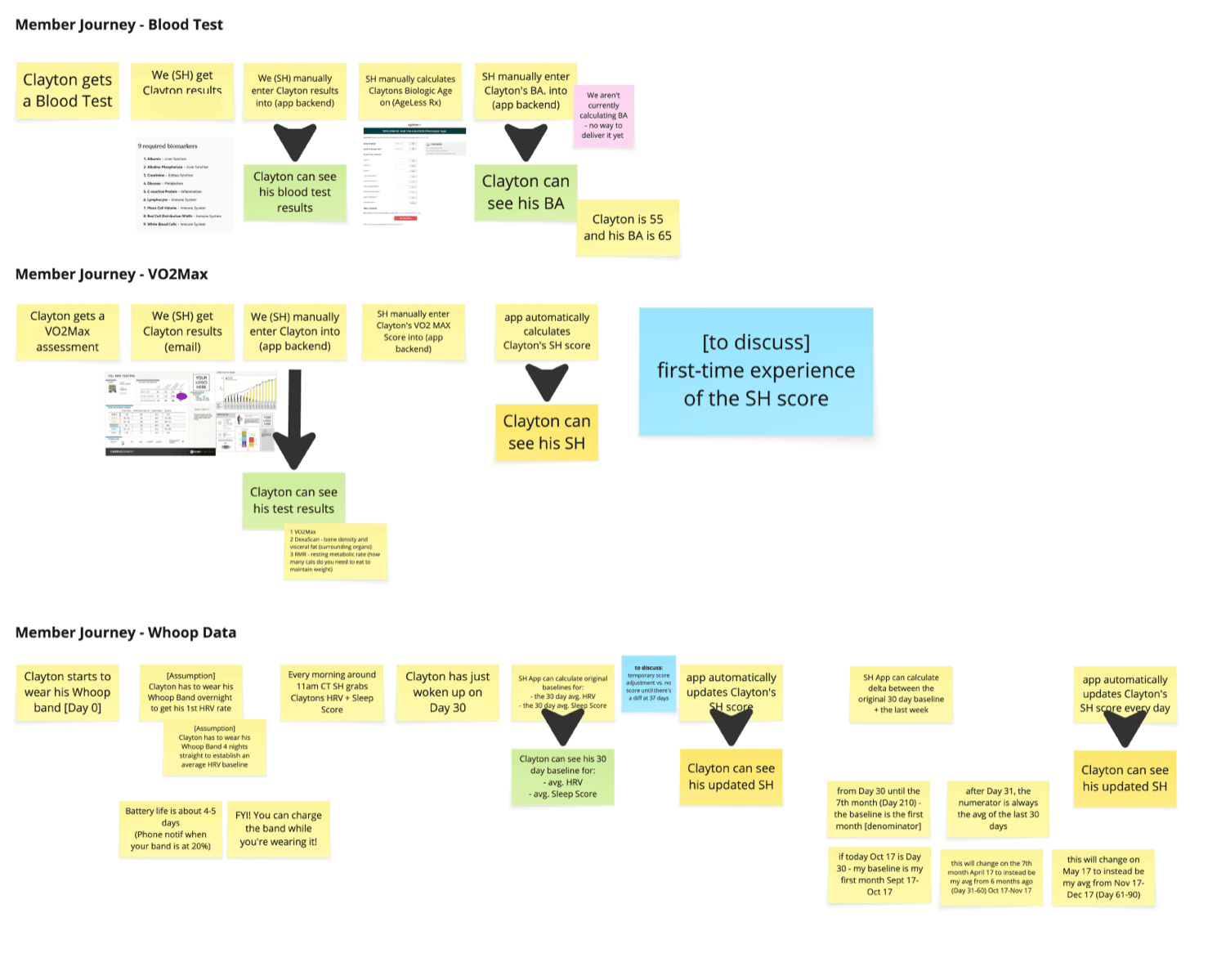
So I decomposed it explicitly: which inputs came from which sources (Whoop HRV, strain, and recovery; Signos time-in-range and glucose variability; VO2 Max, visceral fat, and bone density from fitness evals; lab values like biologic age, Lp(a), and cardiovascular risk; a cognition test), and how the score moved over time. The Whoop journey alone needed a rolling 30-day baseline so "your score went up" meant something real and not just yesterday's noise.
Before any of that became a screen, it was a wall of hand-drawn studies. We sketched the Score as a single big number with room for notes on why it moved, drawn right next to the biomarker charts and body-scan views that would feed it.
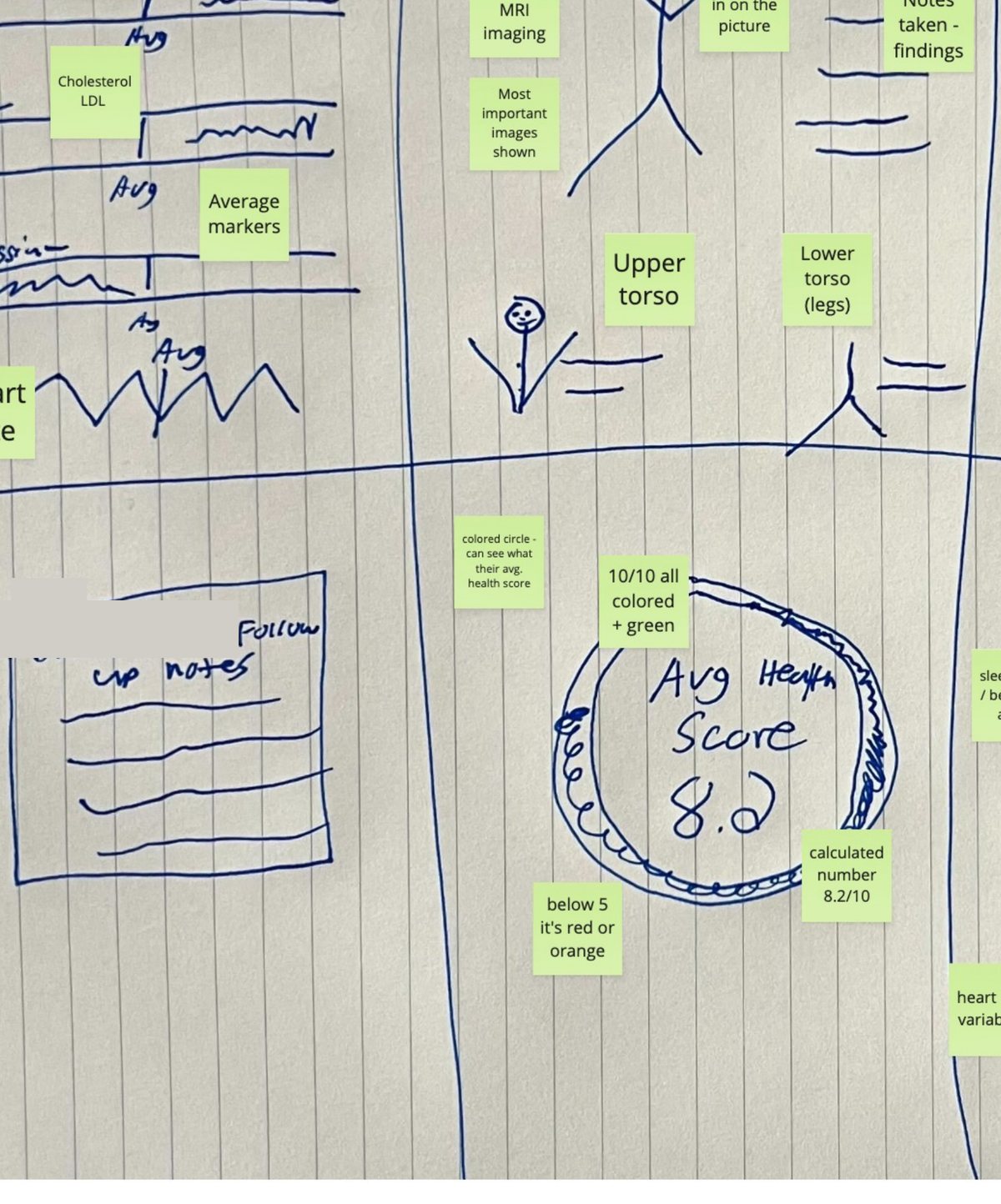
That choice paid for itself everywhere downstream. Instead of building separate views for the data-hungry and the data-averse, both got the Score as their front door, with depth available underneath for those who wanted it. It is the same lesson FLUXX taught in a different domain: in sensitive health products, the win is not showing more, it is giving people one trustworthy thing to act on.
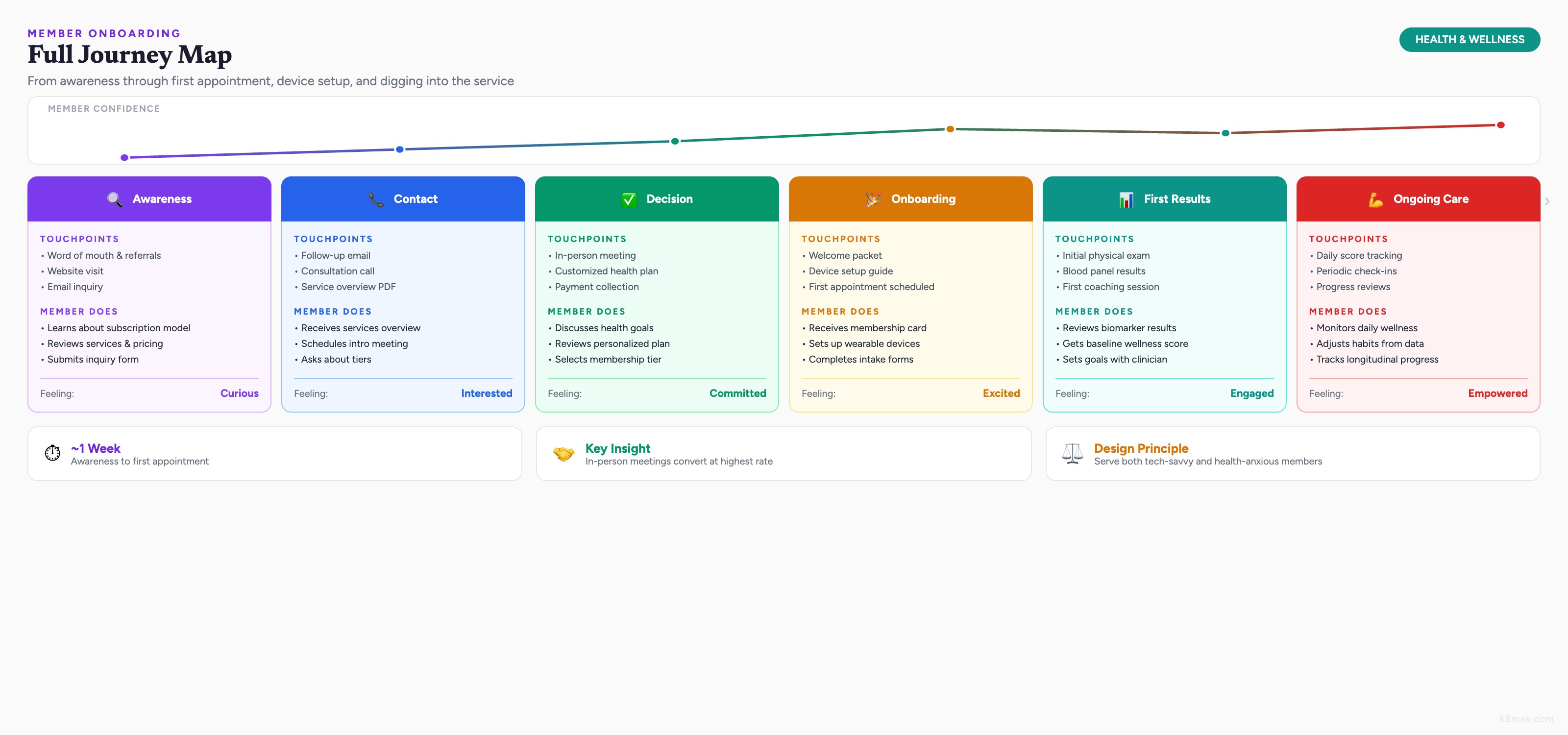
That clean map started as something much messier. Here is the actual working board it came from.
Behind the Score, I mapped real care-delivery workflows (scheduling, diagnostic handoffs, patient communication) and used them to shape features, replacing manual calendars and back-and-forth texts with a centralized scheduling flow. I designed how sensitive results would be delivered and followed up on, treating the risk of confusion or harm as a first-order product constraint, not a polish item.
I also built the team. I referred Sperity's first product designer, who brought in the engineers who became the core dev team, then stood up the early rituals and delivered Product 101 coaching to the founders across MVP concepts, personas, research, OKRs, service blueprints, and prioritization.
Sequencing the build to retire risk
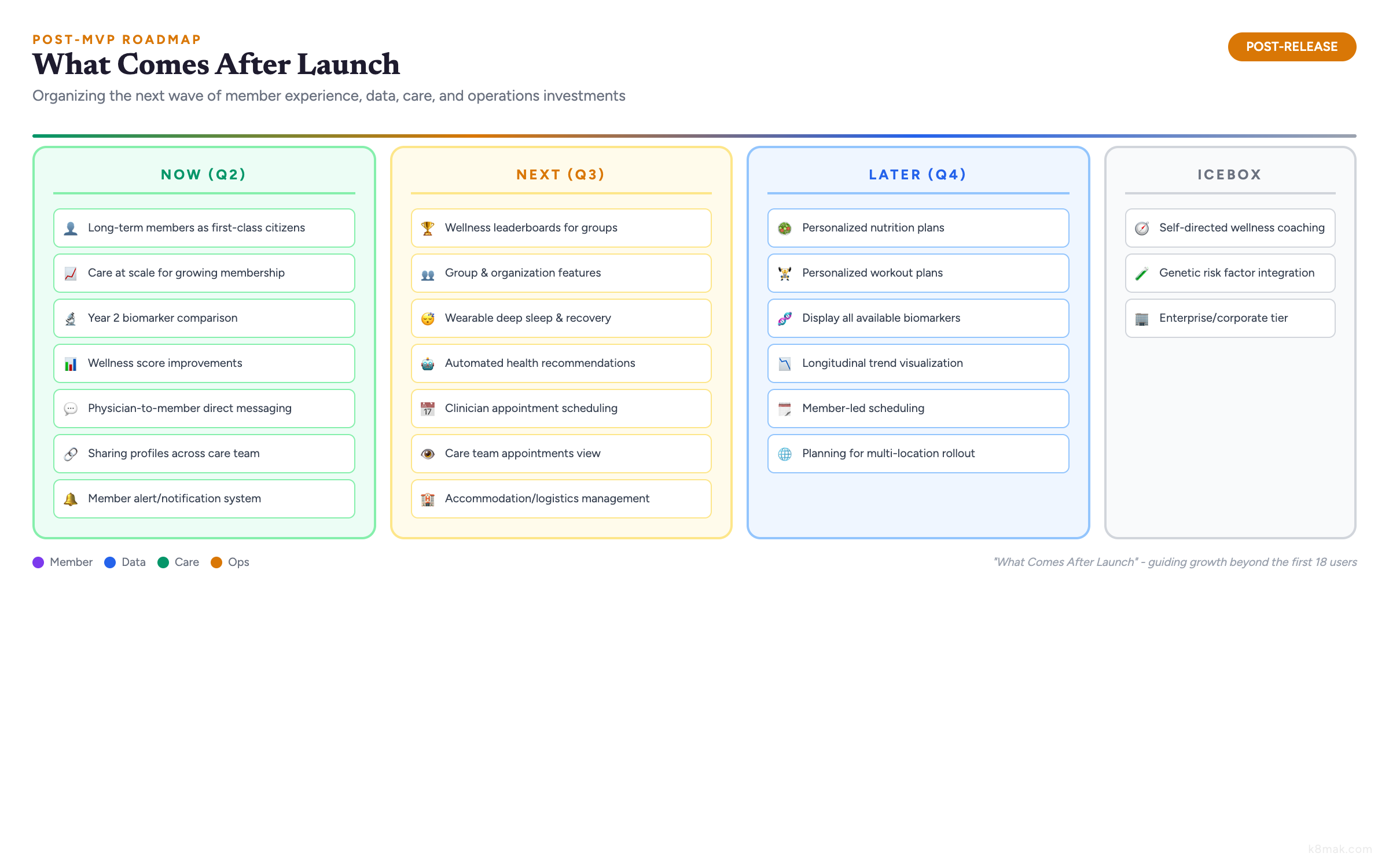
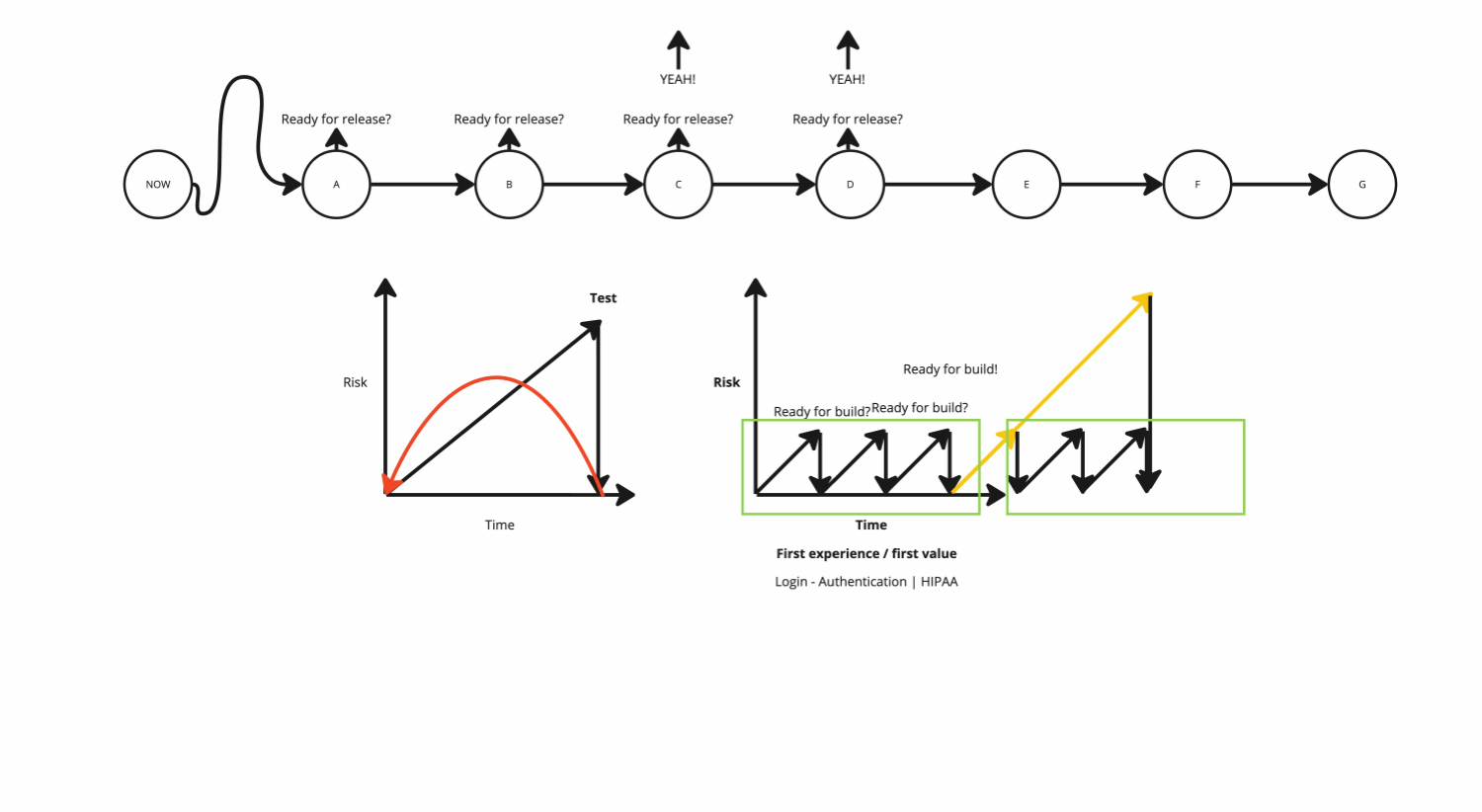
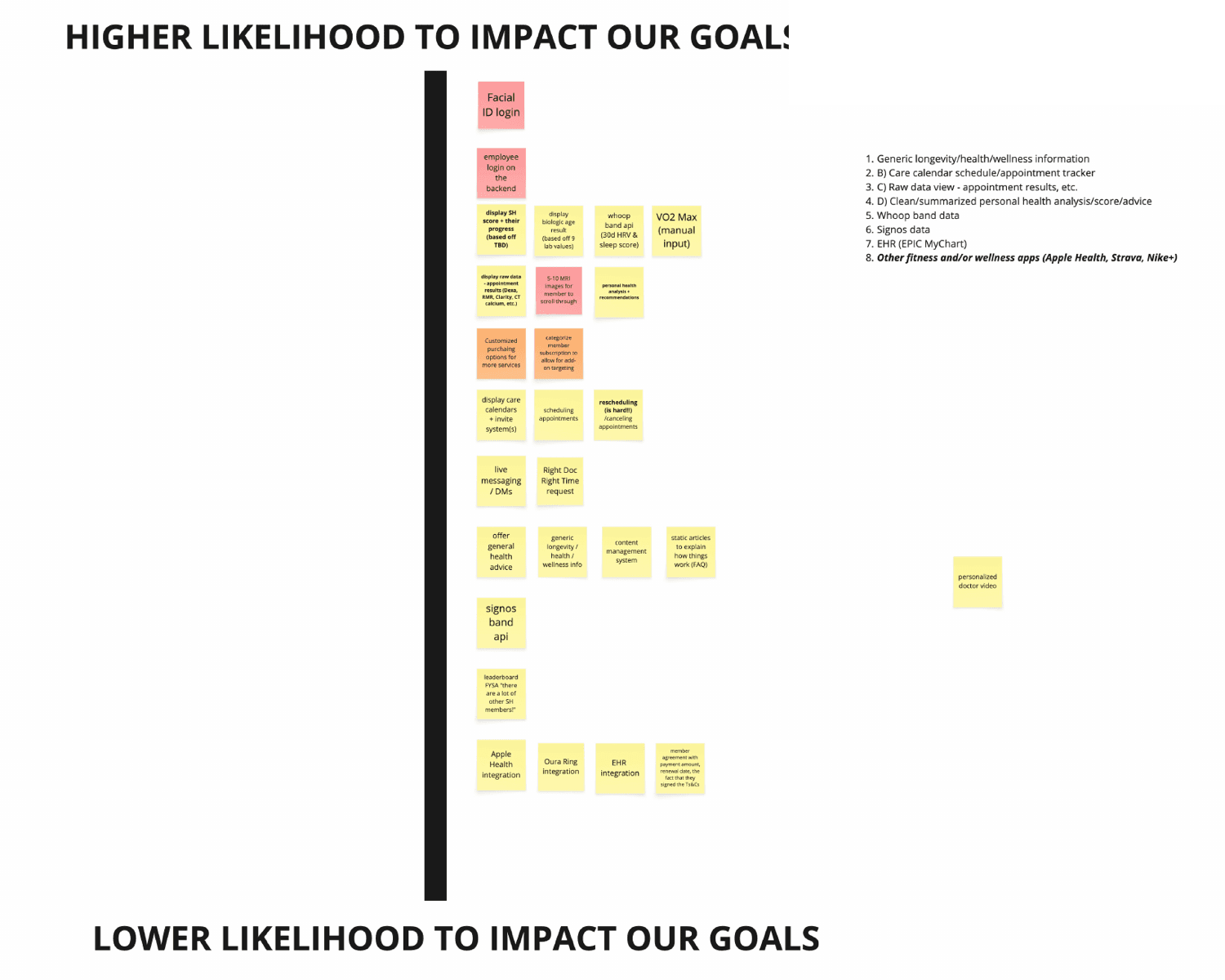
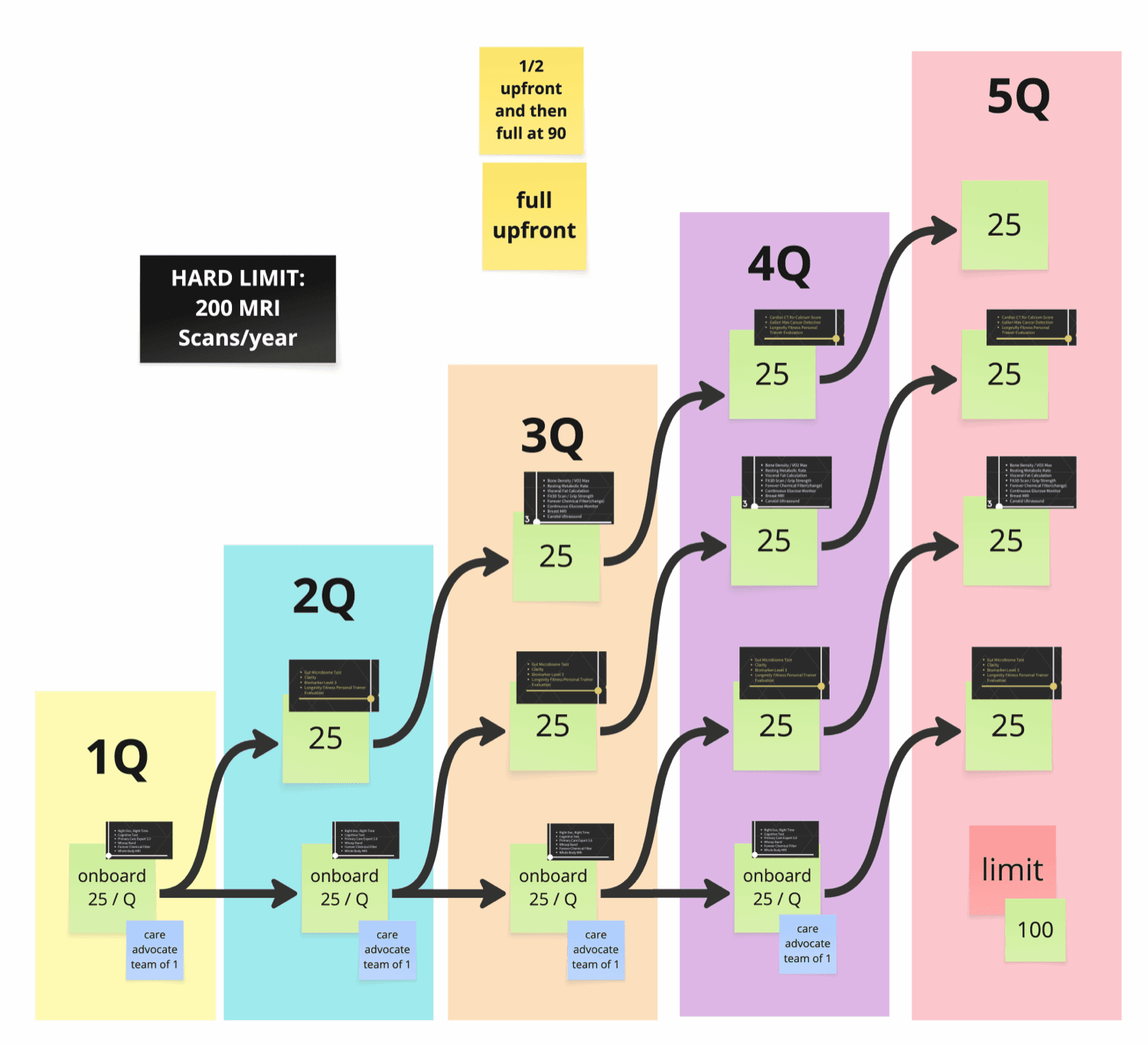
A roadmap is only as good as the order it is built in. I sequenced the work to retire the scariest unknowns first rather than save them for the end, anchoring the first release on the unglamorous but make-or-break path of login, authentication, and HIPAA. Each candidate feature got ranked on a single axis, how likely it was to move our goals, so "nice idea" and "actually matters" stopped competing for the same sprint. And because this is concierge health with real physical capacity behind it, I tied the roadmap to an operations model: onboard roughly 25 members a quarter against a hard ceiling of 200 MRI scans a year, with the care team sized to match. Growth that outran the clinic was not growth.
What this built
- A product foundation built for clinical rigor and member trust. HIPAA-compliant infrastructure, care-aware UX, and a Sperity Score that turns complex biomarker data into something members can act on.
- A team that can ship without a fractional leader. Structured backlog, shared ownership across product, ops, and care, and rituals that replaced founder-driven decisions.
- A strategic foundation to grow from. Member personas, service blueprints, and onboarding journey maps that guide the product as Sperity scales past its first cohort.
Resources & artifacts
What people said about this work
Grant ZarzourFounder & CEO, Hip & Knee Surgeon, Sperity Health“We hired Kate for a short term project, but we quickly realized how valuable her vast skillset is and had to keep her much longer.”
Read full recommendation →

The thinking behind this work
Experiment-Driven Development
The cheapest experiment that could change your mind is worth more than the most sophisticated feature nobody asked for.
Getting Unstuck
Every team gets stuck. The difference is whether you have a framework to diagnose why and a playbook to get moving again.
The Live Whiteboard Method
A repeatable six-move method for live whiteboarding, drawn from real PM interviews and client working sessions. The board is not a finished artifact. It is a legible argument that builds in real time.
Services behind this work
Related case studies
Launching FLUXX: An AI-Powered Menopause Platform
Director of Product (Fractional) · 2024-2025
Fractional Head of Product for FLUXX, a clinician-led menopause platform. Took it from clinical research with no product infrastructure to a launched MVP in under six months, with AI phase scoring validated by real clinicians and a re-engagement model that beat healthtech norms.
Delivery Transformation: Reduced Cycle Times
Principal Product Coach · 2023 - 2024
Improved delivery speed and team clarity by redefining rituals, coaching, and product operations across Kaiser IT.
Building the Kaiser Permanente Product Practice Guide
Principal Product Coach · 2023 - 2024
Created a product playbook and onboarding guide to scale agile practice across Kaiser product teams.
Want to bring this kind of thinking to your team?
I help teams ship products with clarity, speed, and care.
Or trace the through-line: the full 14-year career timeline →