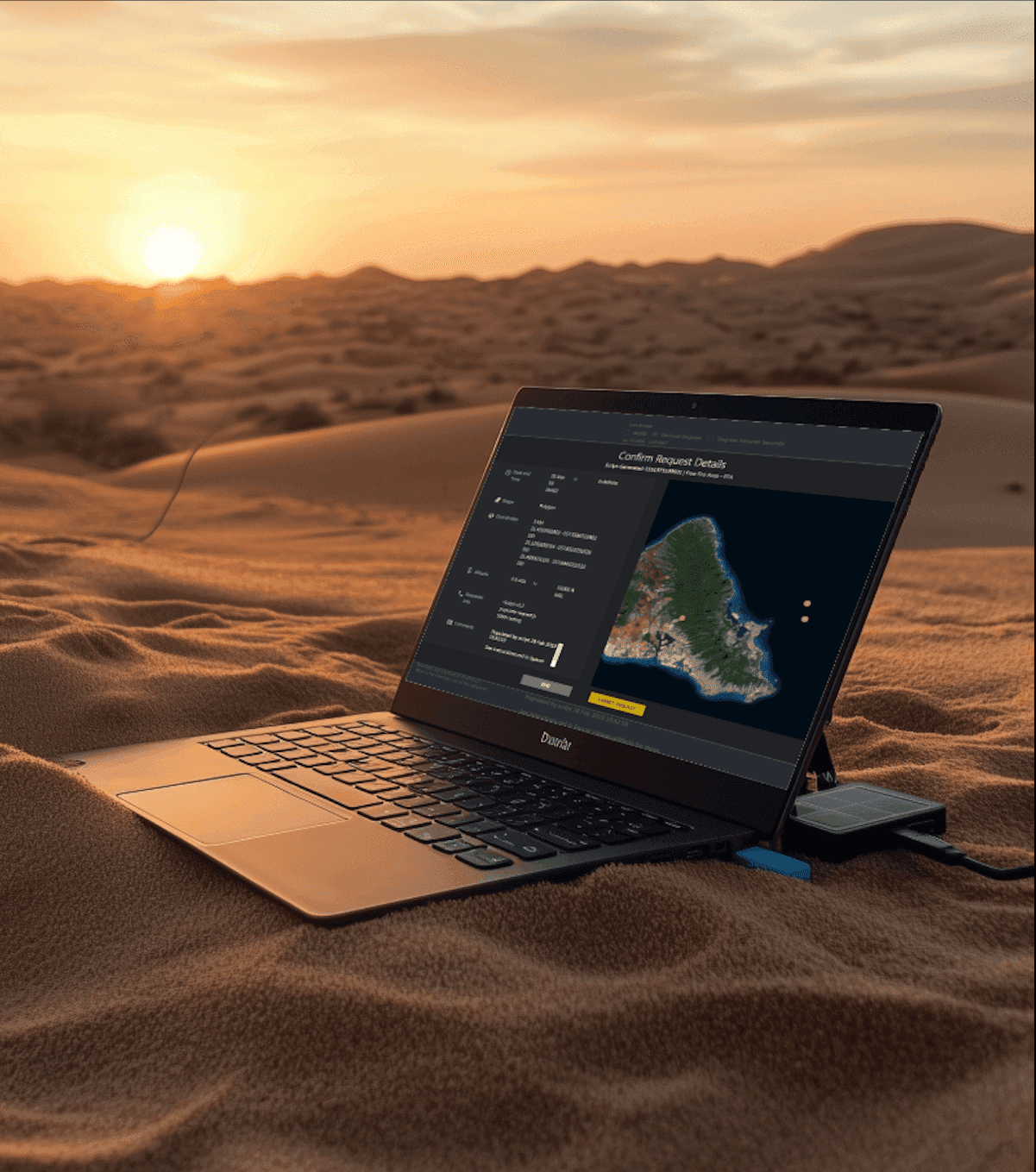
Digitizing Airspace Management for the U.S. Air Force
Government & Defense0-to-1 MVPPlatform / Infra
This is the first time it's felt like someone's actually listening to us. I can't believe we finally have something that makes our job easier.
The impact
Airspace creation: 40 minutes to 3 minutes. 85% of requests arrived incomplete before structured validation. MVP fed downstream mission planning apps used in active theater operations.
Spacer shipped as a working prototype within the Kessel Run software factory, integrated into the KR Event Stream feeding real-time airspace updates to Triton (ATO production) and Slapshot (Master Air Attack Planning). Slapshot's subsequent deployment to the 609th AOC in Doha validated the data pipeline operationally in a combat environment.
The biggest win wasn't the deconfliction logic
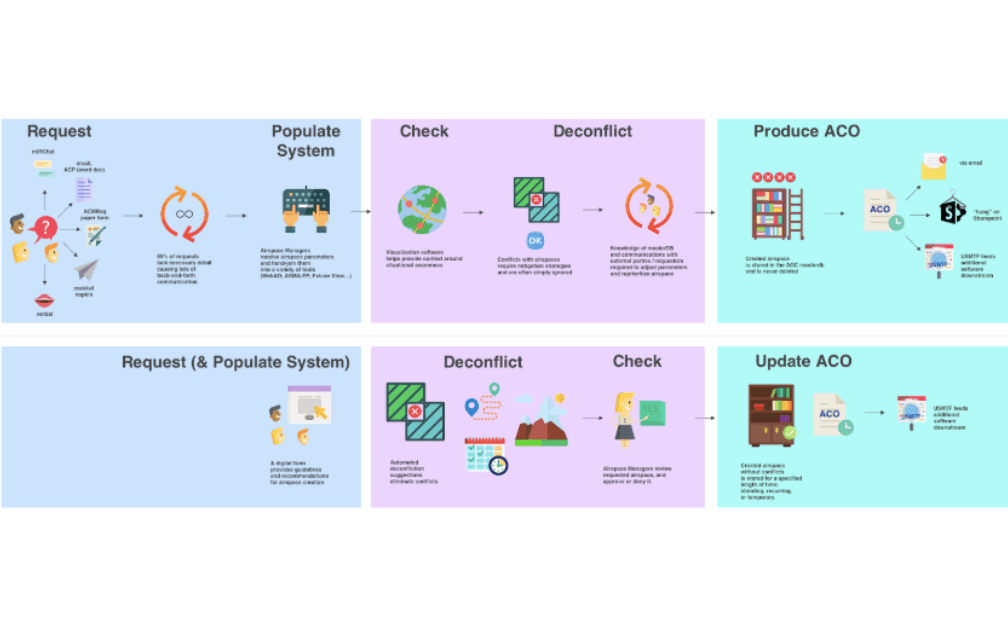
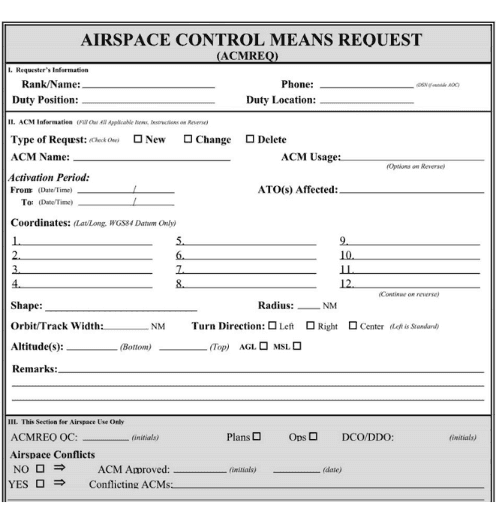
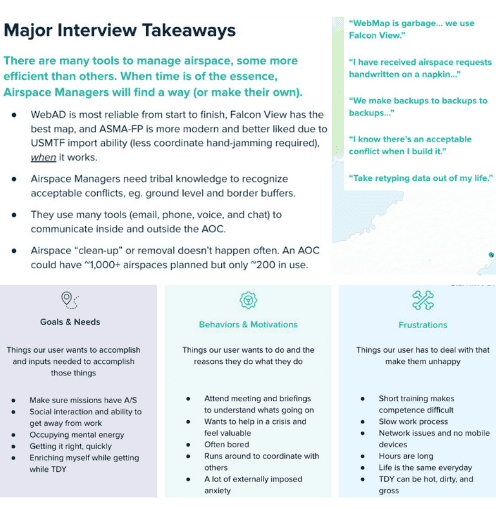
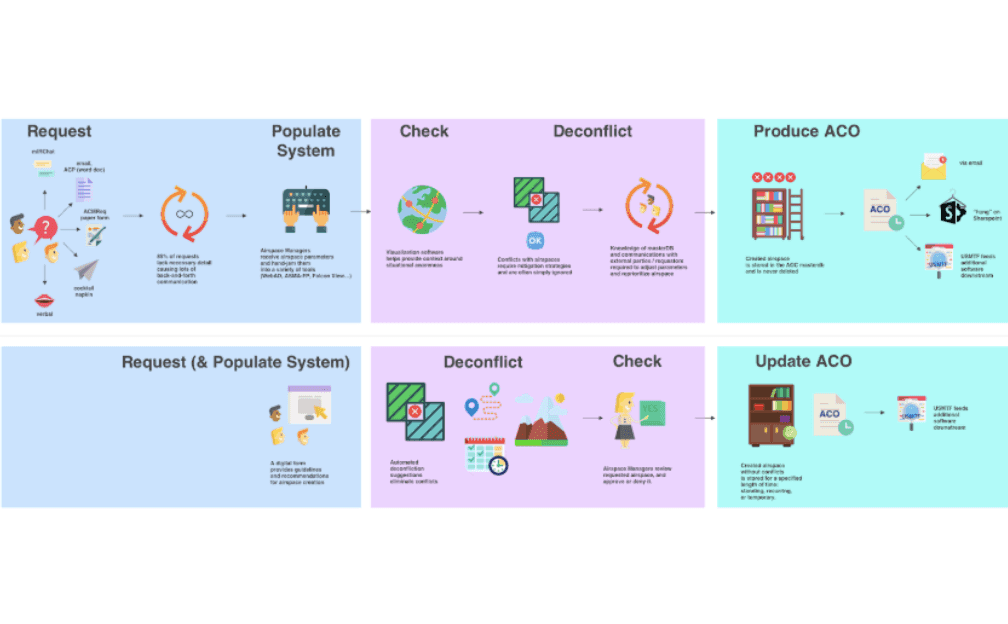
Planes should not collide mid-air. But the systems responsible for preventing that were built on paper forms, chat messages, and decades-old tools. Airspace requestors at Air Operations Centers submitted requests on cocktail napkins, via mIRC chat, or as Word docs emailed between desks. 85% arrived without necessary detail. Airspace managers deconflicted overlaps using tribal knowledge and personal memory, hand-jamming data between TBMCS, WebAD, ASMA-FP, and Falcon View. Legacy airspaces were rarely deleted, cluttering the system with ghost reservations that triggered false conflict alerts.
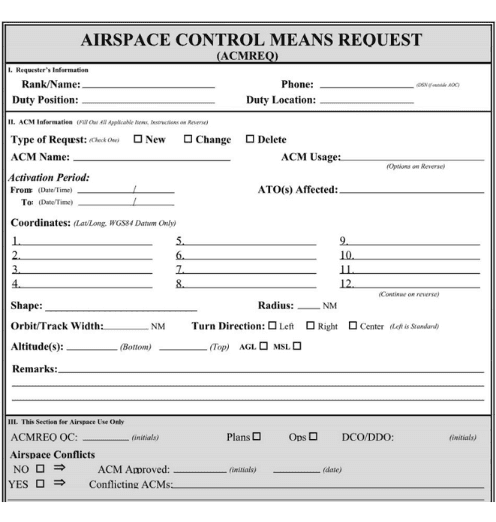
I embedded at Pivotal Labs with Kessel Run engineers and ran 20+ user interviews across four Air Operations Centers (607th, 609th, 612th, 613th) to understand how mission planning actually worked. I mapped the full Air Tasking & Re-Tasking cycle across 7 phases, from initial need through daily planning and execution to real-time change orders. That mapping exposed the real opportunity. The biggest win was not the deconfliction logic. It was structuring the request itself.
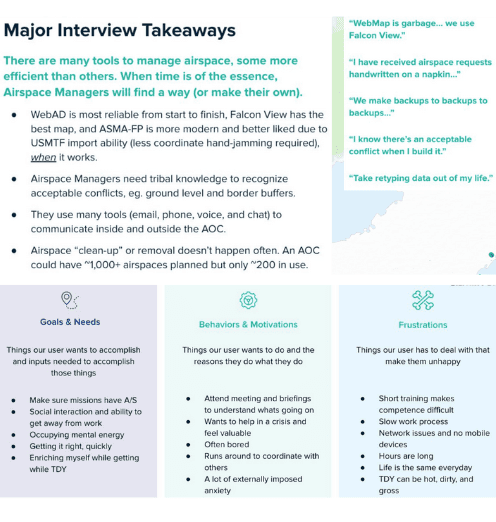
So we built a digital ACMREQ form that guided requestors to include required details from the start. Location as lat/long coordinates, altitude ranges, timing blocks, geometric shapes. The form did what napkins could not: validate inputs before they reached an airspace manager. We added automated conflict detection that suggested small shifts in time, location, or altitude, letting users resolve simple issues before they reached a human.
Trust came from reliability, not polish
Officers expected a flashy, map-heavy interface. We delivered thoughtful validation and functionality first. The MVP looked nothing like the intended future product. Spacer started as what one teammate called "a glorified form." But that was exactly what users needed first, and choosing it over the demo-friendly map was a deliberate bet: in a life-safety system, trust is earned through reliability, not visual polish. Shipping the impressive version first would have looked better in a stakeholder review and served the users worse.
We built the system to produce ACO-ready entries in USMTF format, ensuring compatibility with existing ATR systems. Spacer published to the KR Event Stream, feeding real-time airspace data to Triton and Slapshot and replacing manual data handoffs across squadrons.
What this built
- A digital foundation for airspace coordination. Validated requests, automated conflict detection, and USMTF export replaced a fragmented system of napkins, chat, and hand-jammed legacy tools.
- A proven data pipeline for mission planning. Spacer's integration into the KR Event Stream was validated operationally when Slapshot deployed to the 609th AOC in Doha, consuming upstream airspace data in a combat environment.
- A model for shipping in high-stakes government environments. Full Pivotal methodology (XP, TDD, pair programming, balanced teams) applied to classified military software, with coaching that enabled the AF PM to transition into engineering on a sister product.
Resources & artifacts
PDFAirspace Management Product Review
Engagement summary: airspace management platform for the U.S. Air Force's Kessel Run software factory, covering discovery approach, delivery practices, and outcomes.
Link
Kessel Run -- Air Force Software Factory
Official Kessel Run product lines page, including the Operational Command & Control pillar where Spacer lived.
The thinking behind this work
Experiment-Driven Development
The cheapest experiment that could change your mind is worth more than the most sophisticated feature nobody asked for.
Iteration Planning
Iteration planning is where commitment meets reality. Done well, it gives the team a shared plan they believe in. Done poorly, it's a status meeting with extra steps.
Story Writing
A well-written story is a contract between product and engineering. It says what 'done' means before anyone writes a line of code.
Services behind this work
Related case studies
U.S. Space Force - Platform Delivery Modernization
Product Portfolio Lead · 2024 - 2025
As the Product Lead for the US Space Force's Capability Delivery Division, I helped transform a stalled, fractured development org into a functioning delivery engine. I rebuilt the backlog, clarified the roadmap, shaped the rituals, and helped engineering teams move from chaos to confidence - without burning out.
Launching FLUXX: An AI-Powered Menopause Platform
Director of Product (Fractional) · 2024-2025
Fractional Head of Product for FLUXX, a clinician-led menopause platform. Took it from clinical research with no product infrastructure to a launched MVP in under six months, with AI phase scoring validated by real clinicians and a re-engagement model that beat healthtech norms.
Designing a Wellness MVP for Biomarker-Driven Preventative Care
Director of Product (Fractional) · 2024 - 2025
Served as Fractional Director of Product to lead Sperity Health from vaporware to a functioning, HIPAA-compliant MVP. Built the roadmap, treatment logic, product team, and app experience for members to understand diagnostics, track progress, and access elite care.
Want to bring this kind of thinking to your team?
I help teams ship products with clarity, speed, and care.
Or trace the through-line: the full 14-year career timeline →